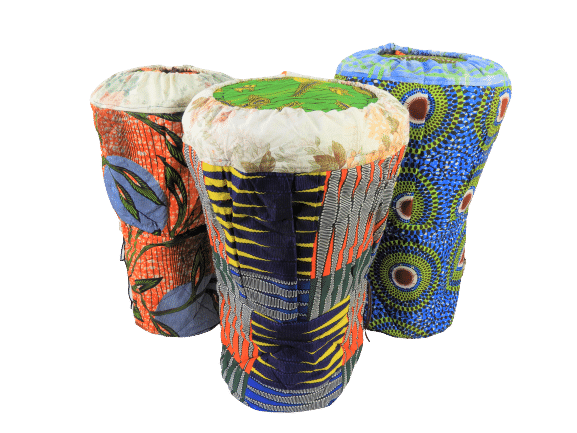
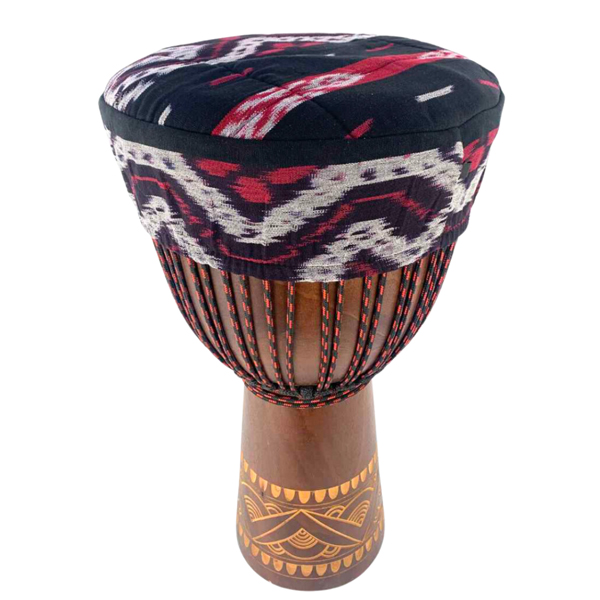
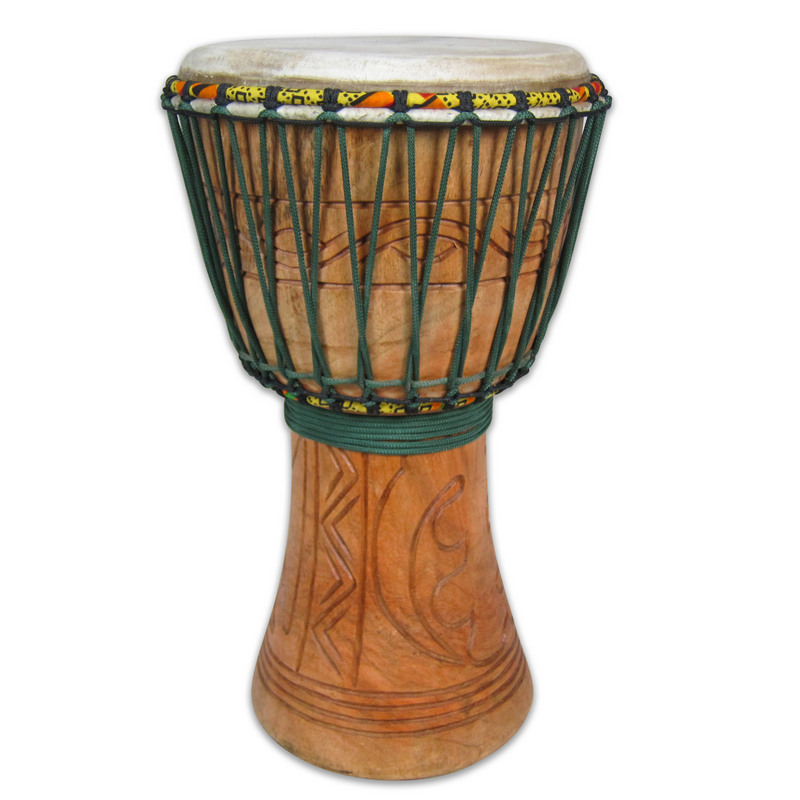
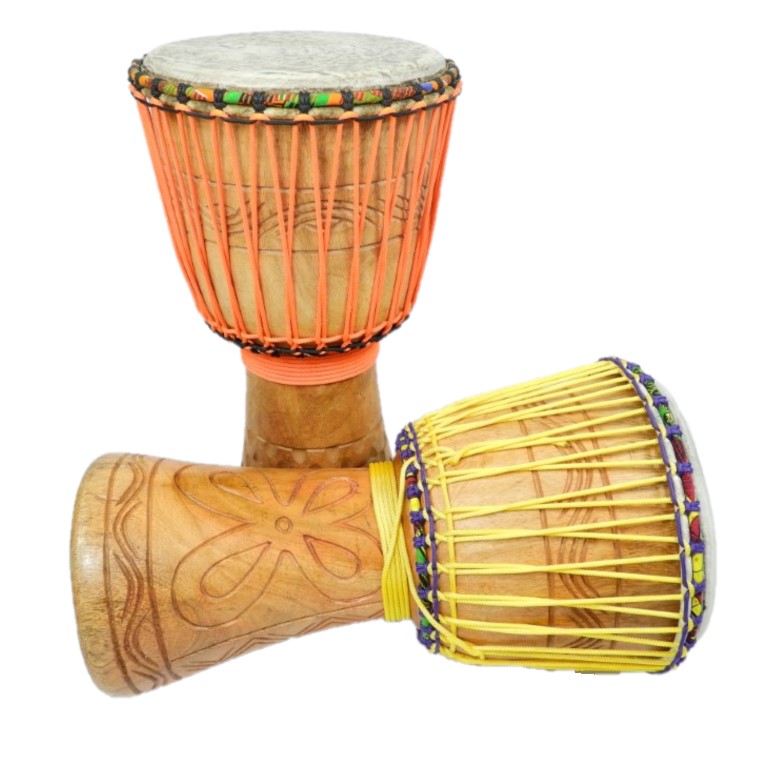
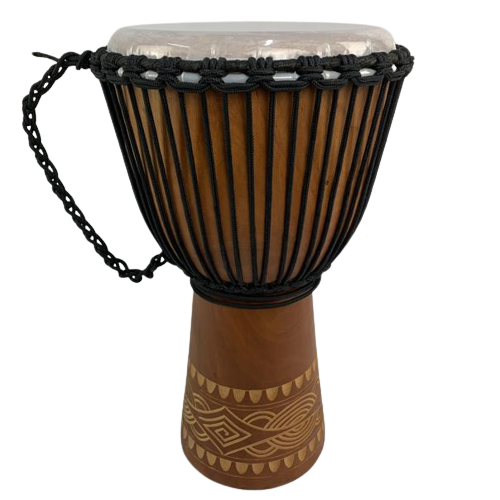
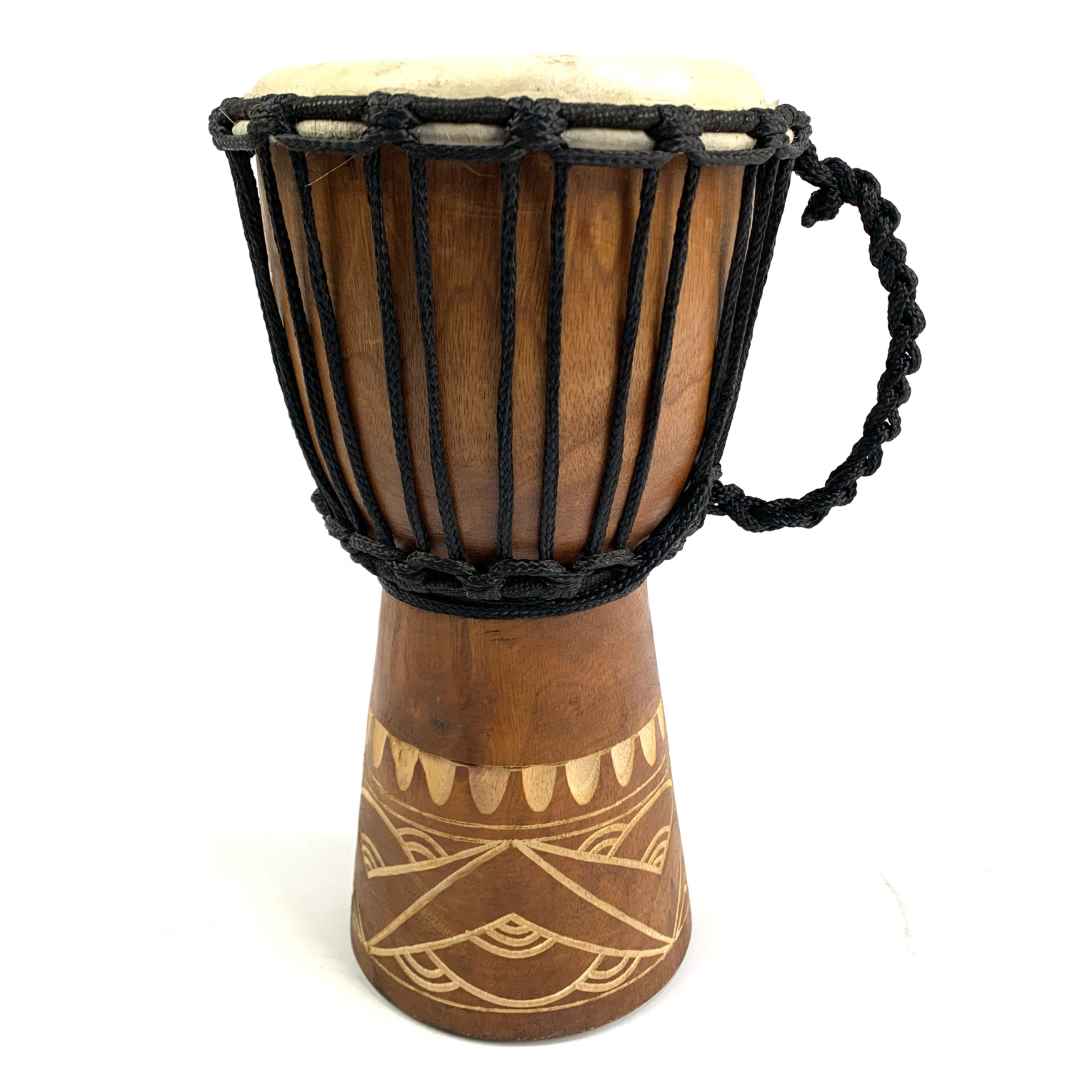
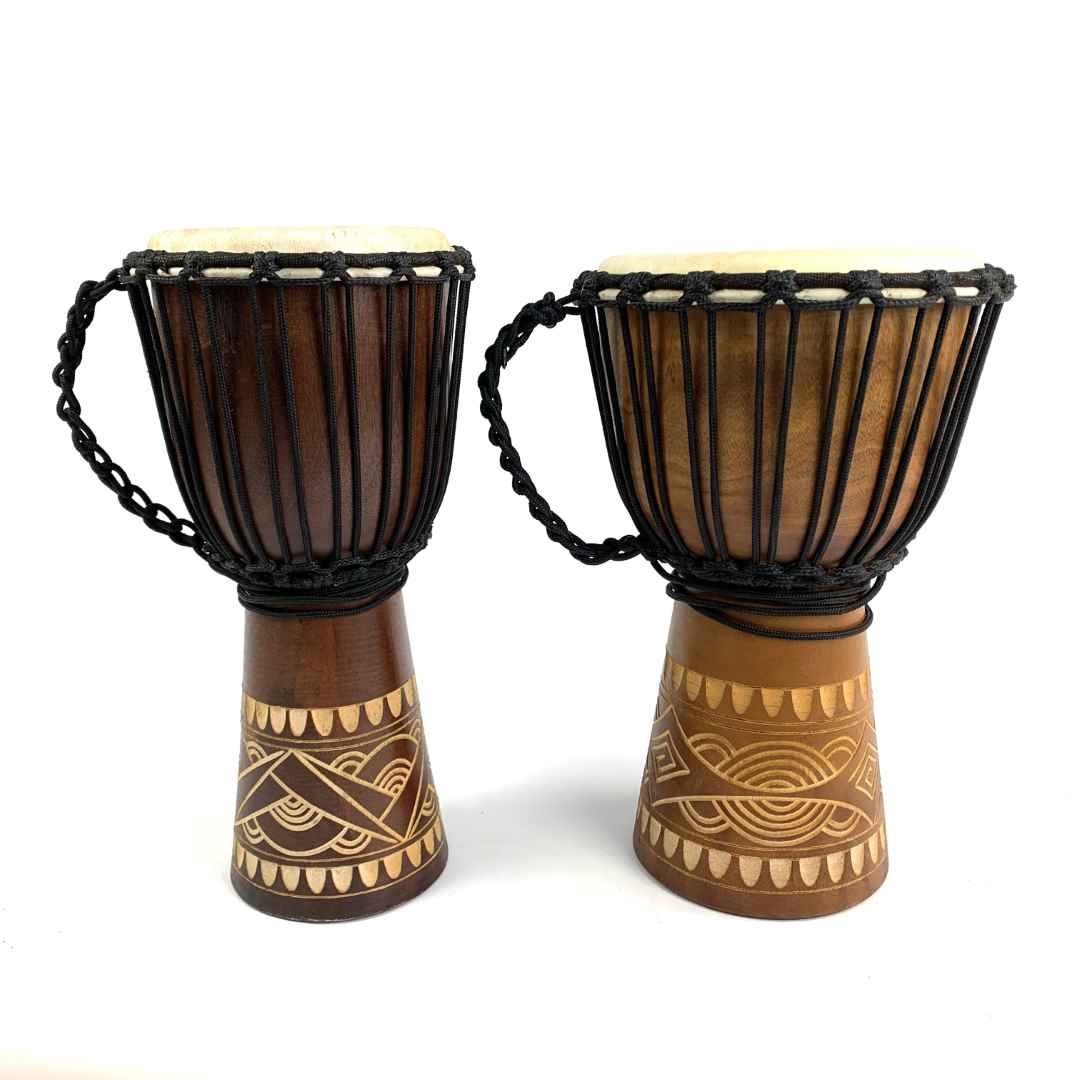
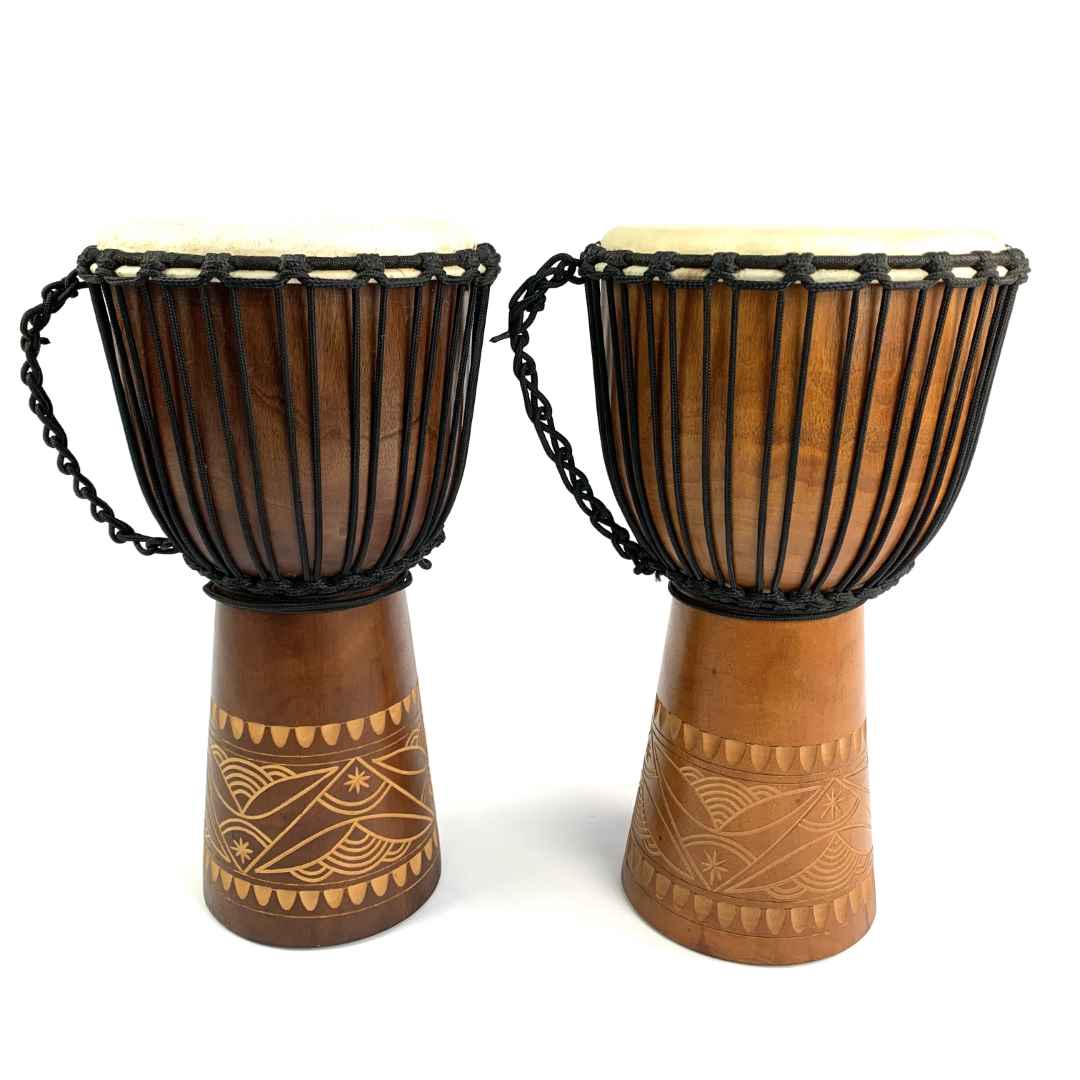
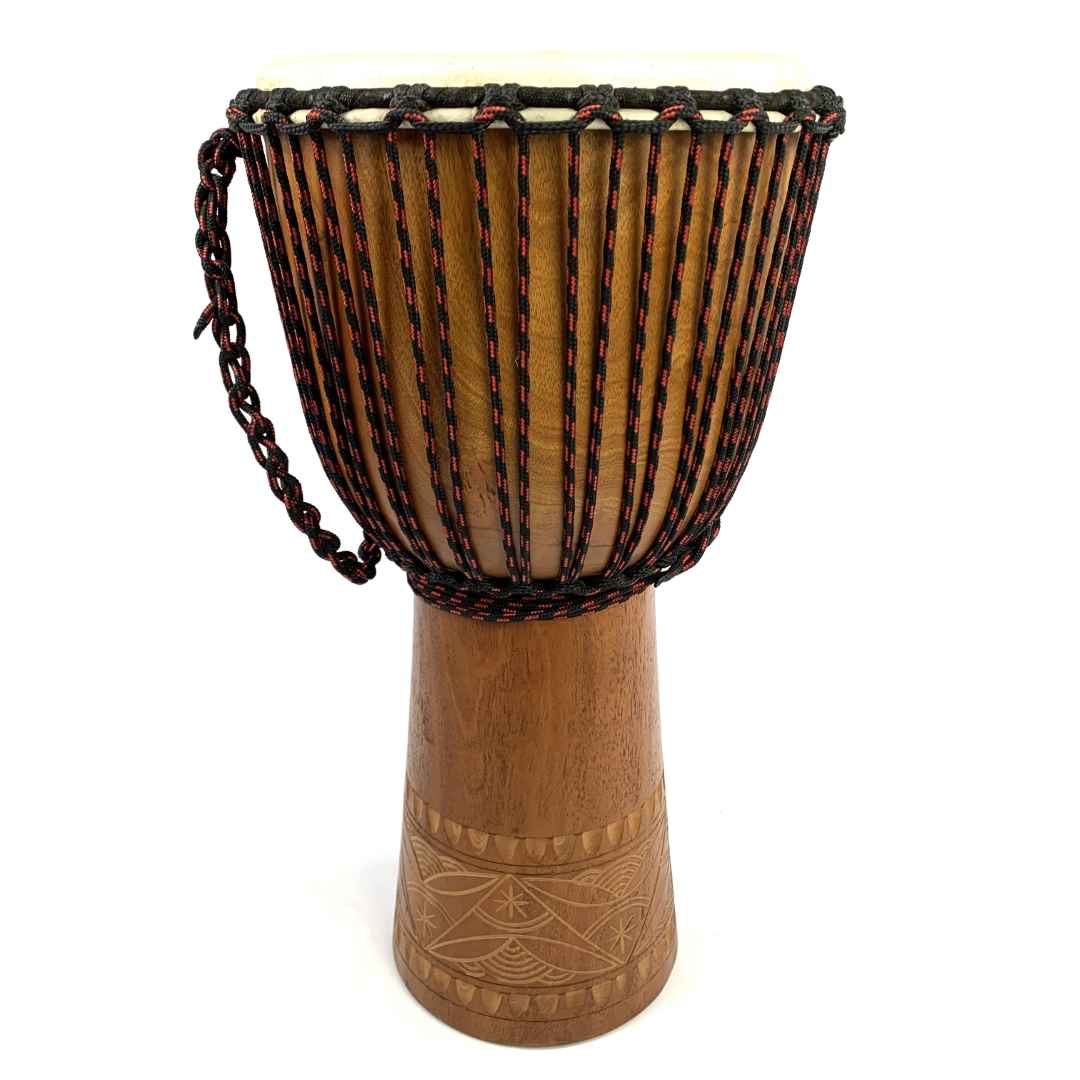
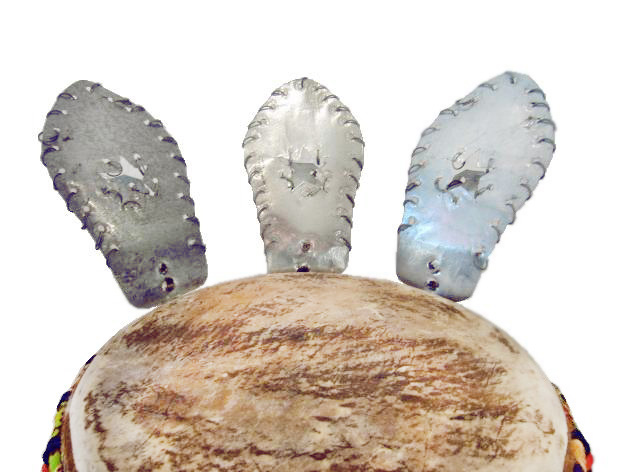
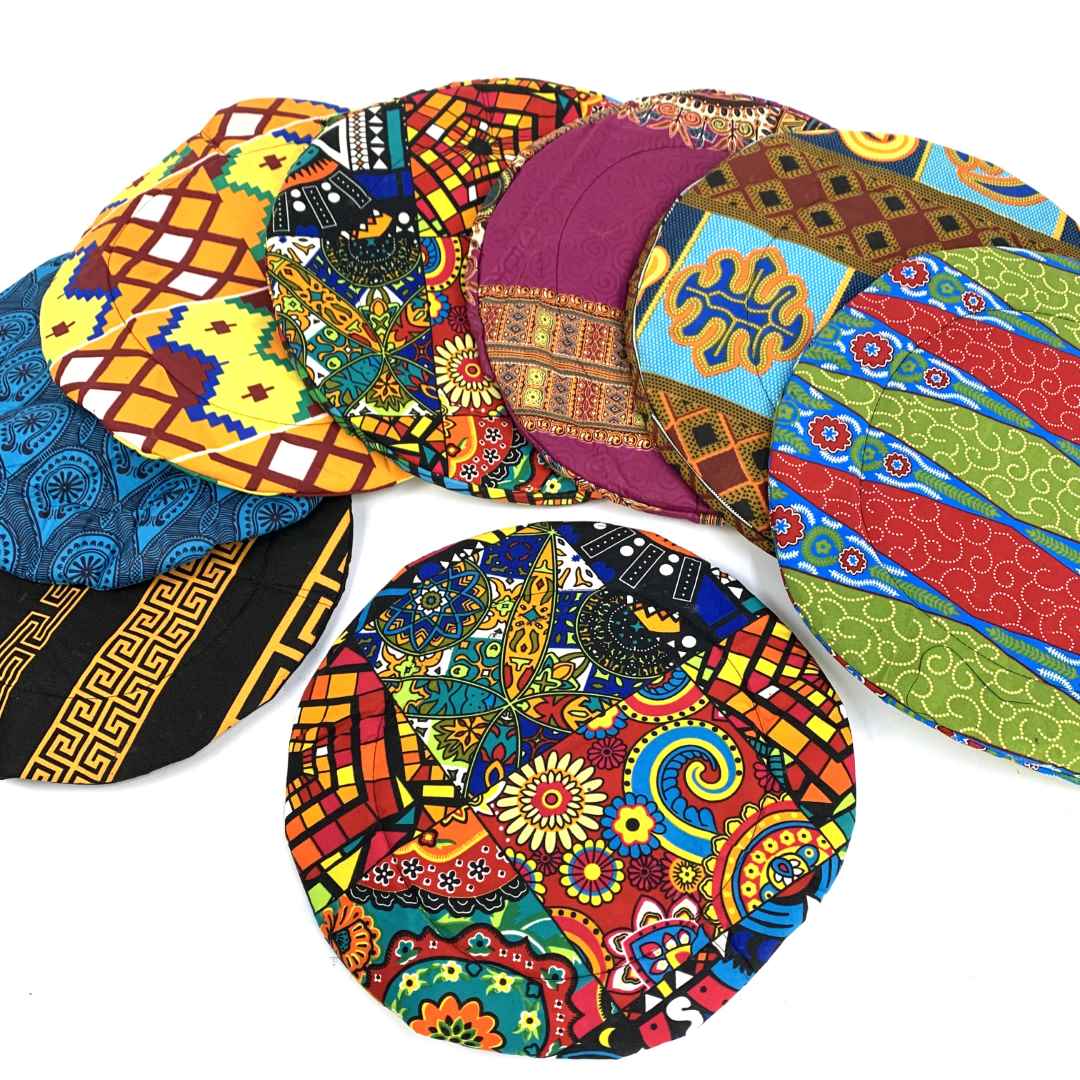
Our djembes are made by experienced craftspeople across West Africa, built for genuine projection and authentic sound.
The range covers all sizes and ages, and suits beginners picking up their first drum, teachers running group programs, and experienced players looking for a serious instrument.
All djembes come with our warranty.
The djembe has been played across West Africa for centuries. Hand-carved and played with the bare hands, it produces three distinct sounds: bass, tone, and slap.
That combination gives it a remarkable range and expressiveness..
Get in touch if you’d like help finding the right djembe for your needs.
Choosing a djembe depends on a few key factors: your height, experience level, and the type of sound you prefer.
Our full guide on how to choose a djembe goes deeper, including height and age charts, and the djembe ranges compared.
Still not sure? Get three personalised video picks based on your height, budget and experience level.
For a first drum, a Ghana series djembe is the most popular choice – An authentic djembe hand carved in West Africa.
The Ghana djembes are light, carved from Twenaboa timber, with a strong bass and an entry-level price.
If budget is the main factor, the Indo range, made to African Drumming’s spec in Indonesia, is the most affordable full-size option, starting with the 60cm Plus djembe.
A thin or medium goat skin suits beginners either way.
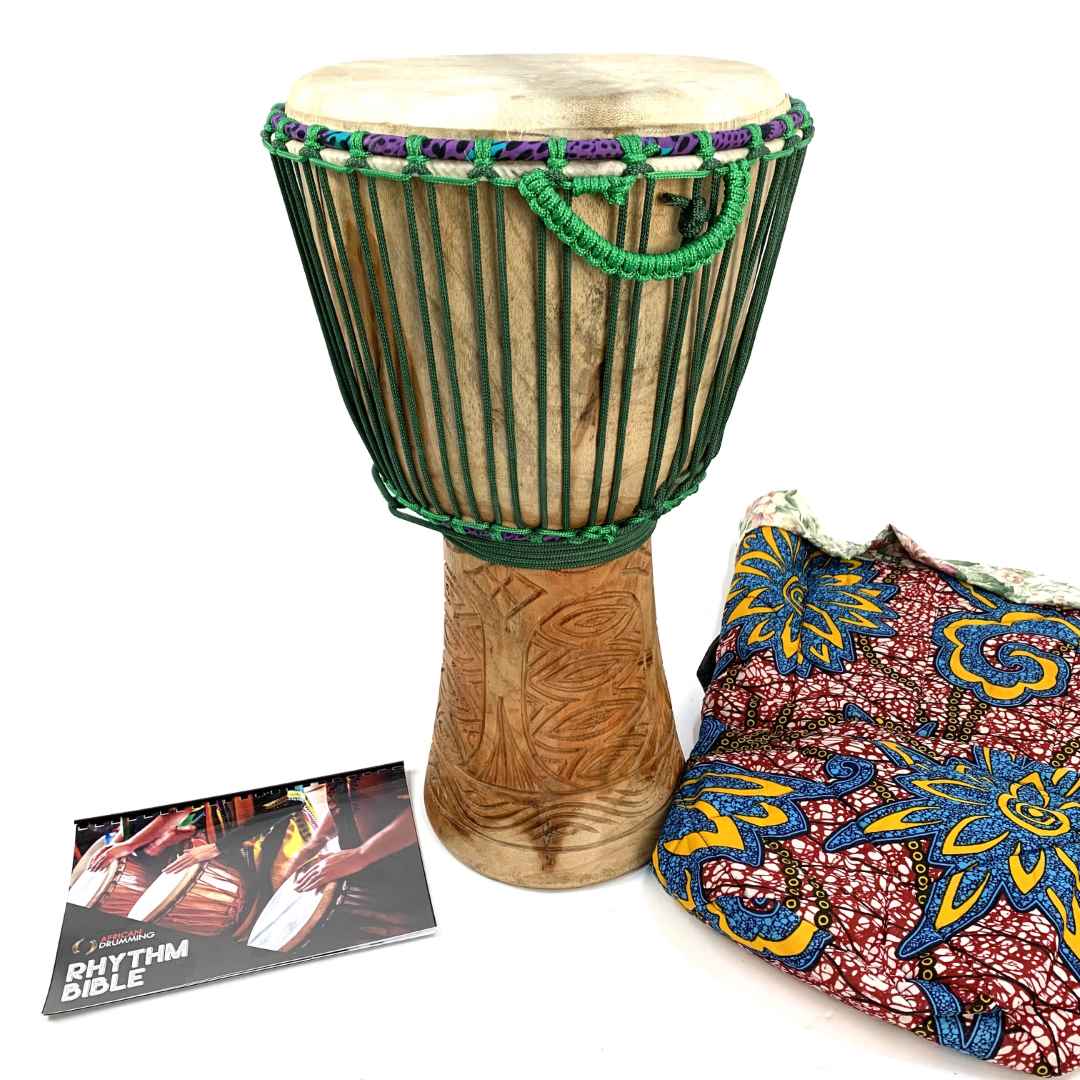
Ghana djembes are carved in West Africa from Twenaboa, a medium-density timber, light-weight with a strong low end.
Indo djembes are made by the African Drumming team in Indonesia from mahogany, consistent and forgiving, and usually the lowest price.
Both are solid, beginner-friendly options; the choice is West African origin versus lower cost.
A djembe is carved from a single piece of timber and topped with a natural skin head held by rope.
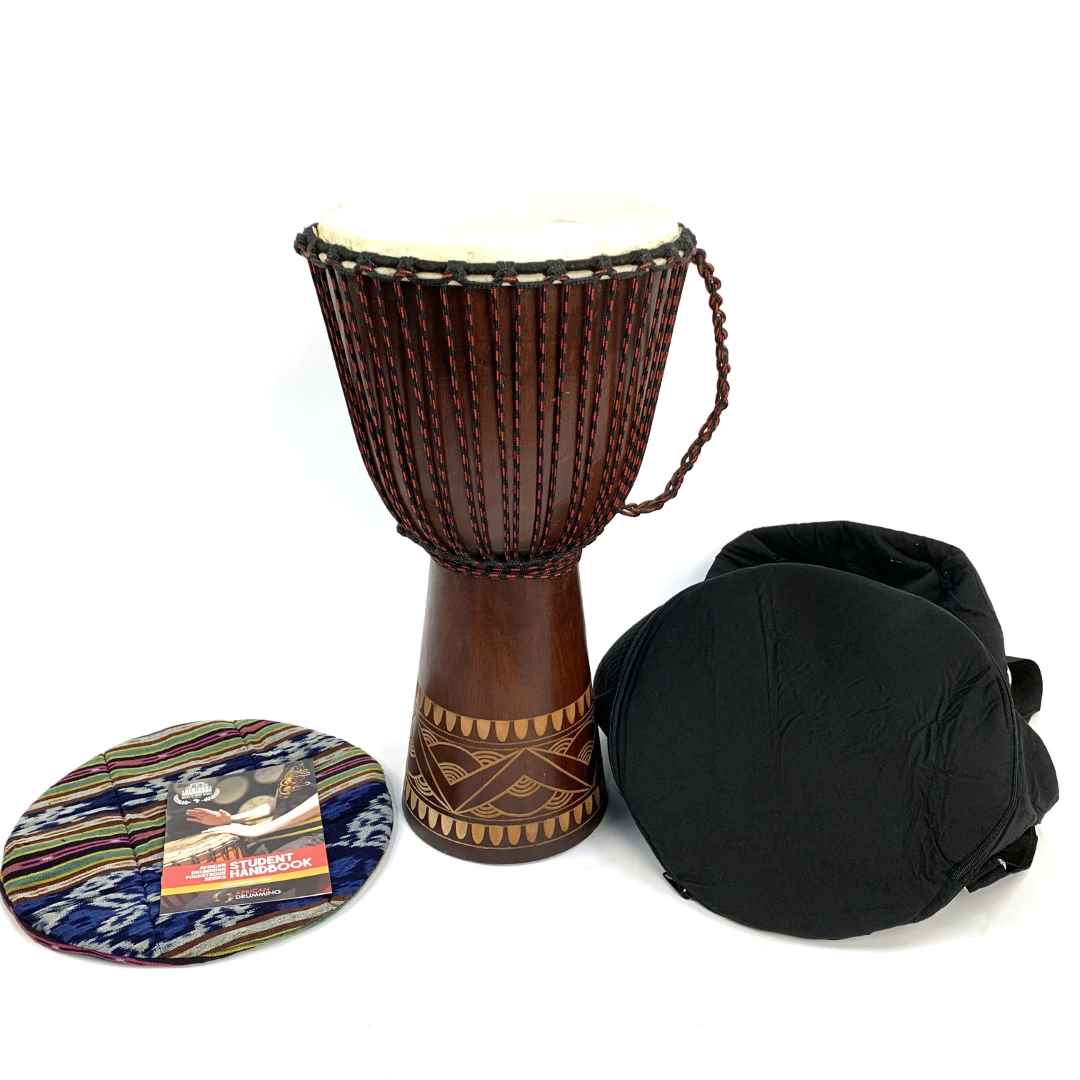
African hardwood drums use dense timbers like Lenke, Khadi, Djala, Dougarra, Numu, Iroko and Melina, which give a wide tonal range and strong projection; Ghana drums use medium-density Twenaboa; and our Indo range uses sustainably sourced mahogany.
Djembe heads are usually goat, cow or yearling skin, with synthetic vegan options available too.
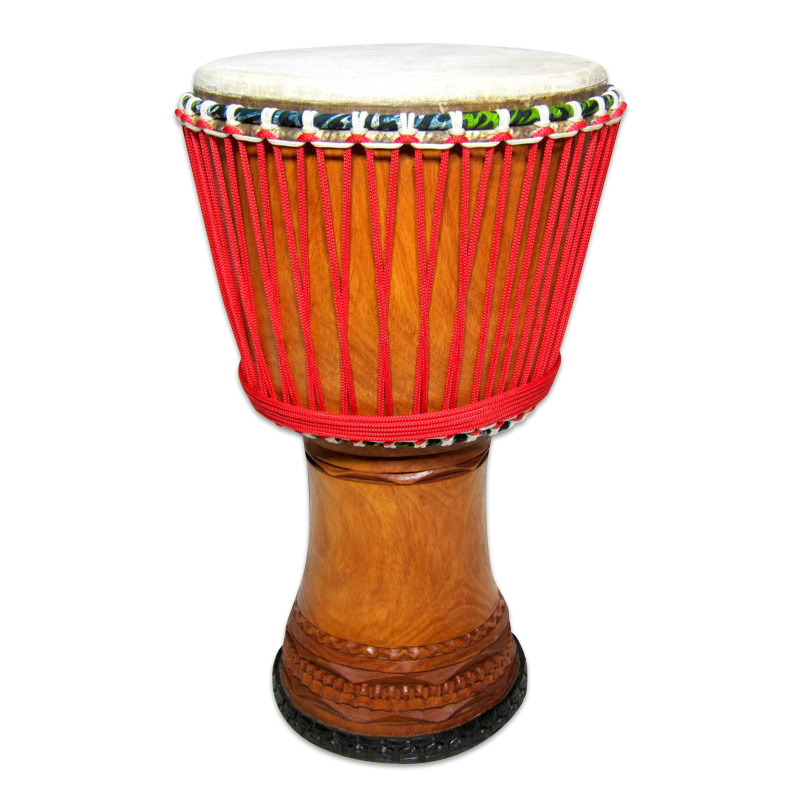
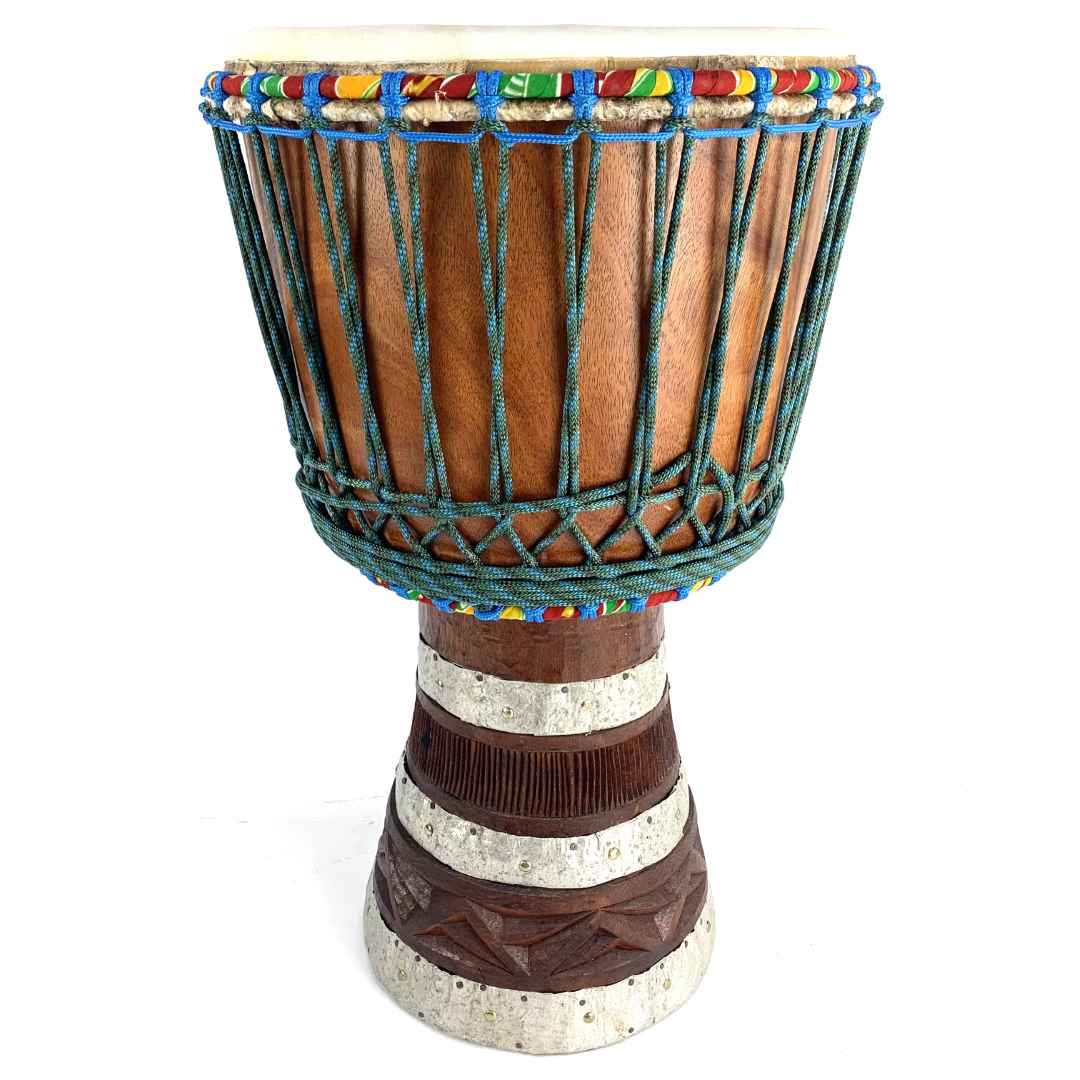
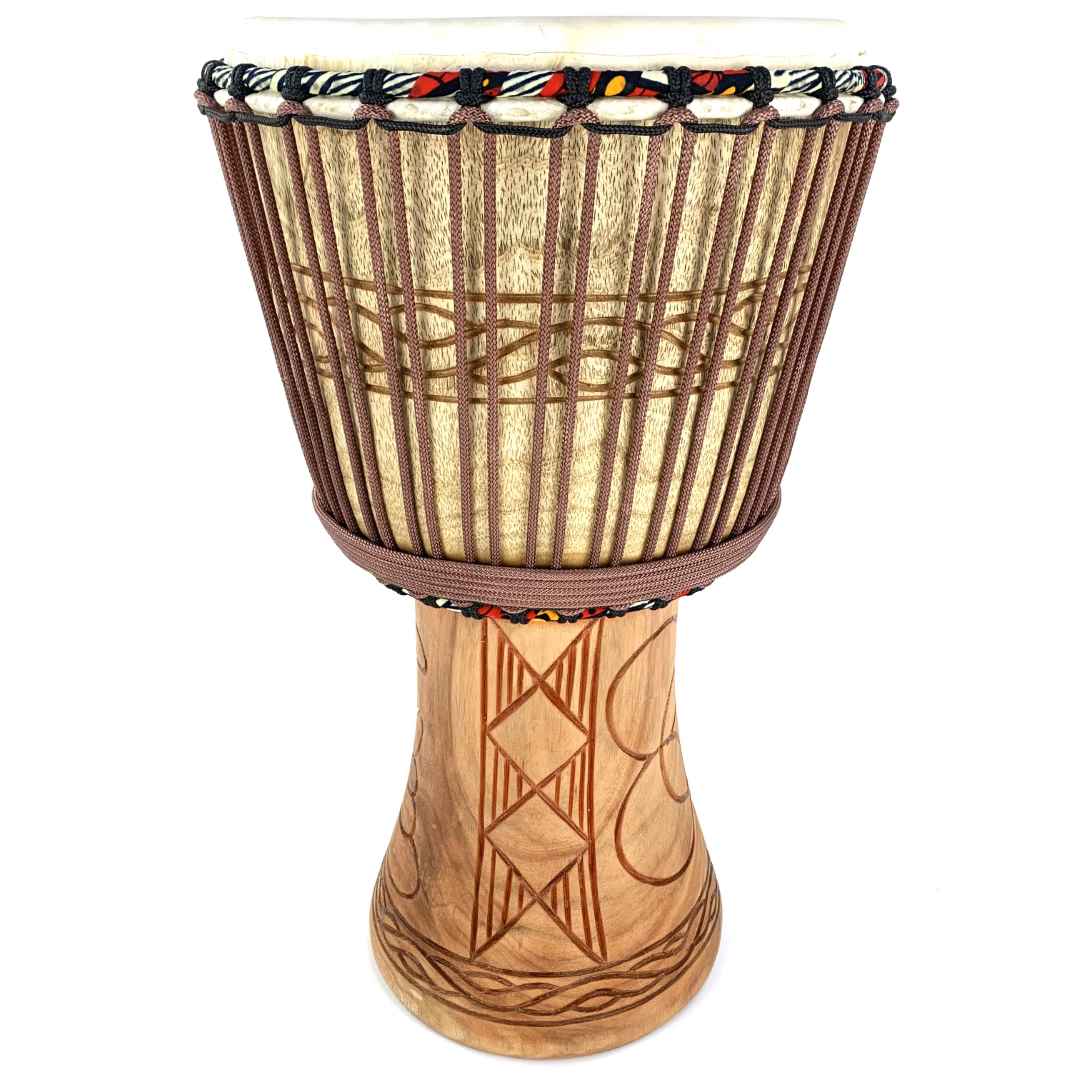
Our African djembes are hand-carved in West Africa, mainly in Guinea, Mali, Ivory Coast, Burkina Faso and Ghana, by master carvers.
We complete the rope work, skin fitting, and tuning in Australia, so every drum meets our sound and build standards.
Our Indo range is made to our specifications in Indonesia, an affordable option across all ages and sizes, including for schools, workshops and community use.
The rope used across our djembe range is high-tensile and low-stretch, so the drum holds its tuning, and every part is chosen for durability and sound.

Through the years, we’ve noticed that two mistakes are the most common.
The first is size: buying a drum that’s too short, too tall, or too heavy to play comfortably.
The second is skin: a thick cow skin can sound good under an experienced djembe player, but it’s hard work for a beginner, who plays better on a thinner goat skin.
Our guide on how to choose a djembe walks you through getting size and skin right.
The skin thickness matters a lot.
Generally speaking, goat skin responds more quickly than cow, and is kinder on the hands, so it suits beginners; Cow or yearling skin (young cow) is generally thicker and tougher, and better suited to experienced hands.
If you’re starting out, a thin to medium goat skin is the easier place to begin.
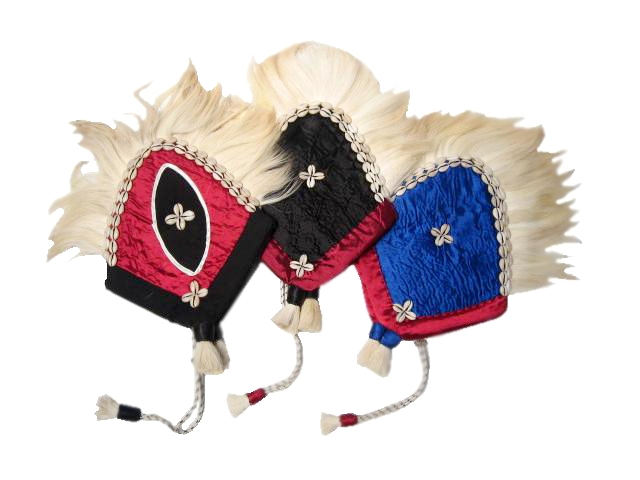
On some West African hardwood drums, you’ll also see an overlap style skinning, where the hide is left long and folded over the rings, sometimes with the hair kept on; that’s a visual finish, without a change in sound.
Quality shows in the timber, the bearing edge, and the carving.
The shell should be one piece of timber, with a smooth rim and no divots or cracks where your hand strikes. Rushed carving and rough edges usually point to a drum made quickly.
Rings that are too big for the drum are also a sign of poor drum-making.
All these factors can lead to uncomfortable playing and often poorer sound quality.
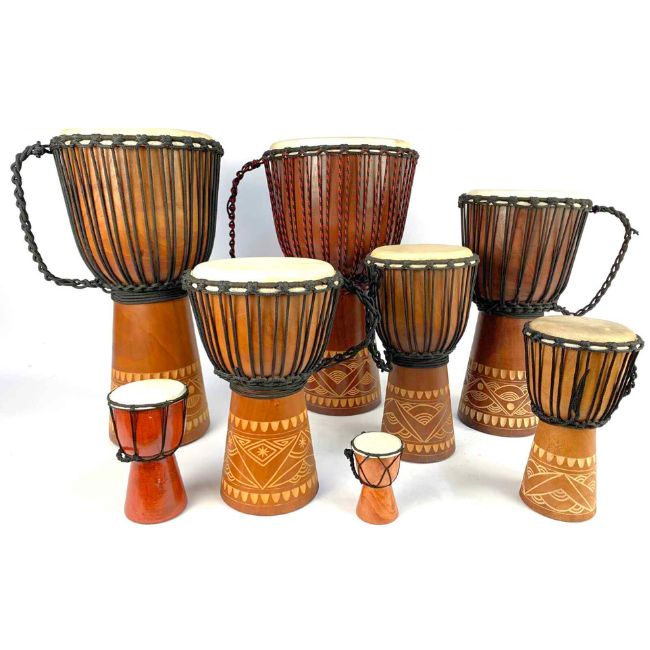
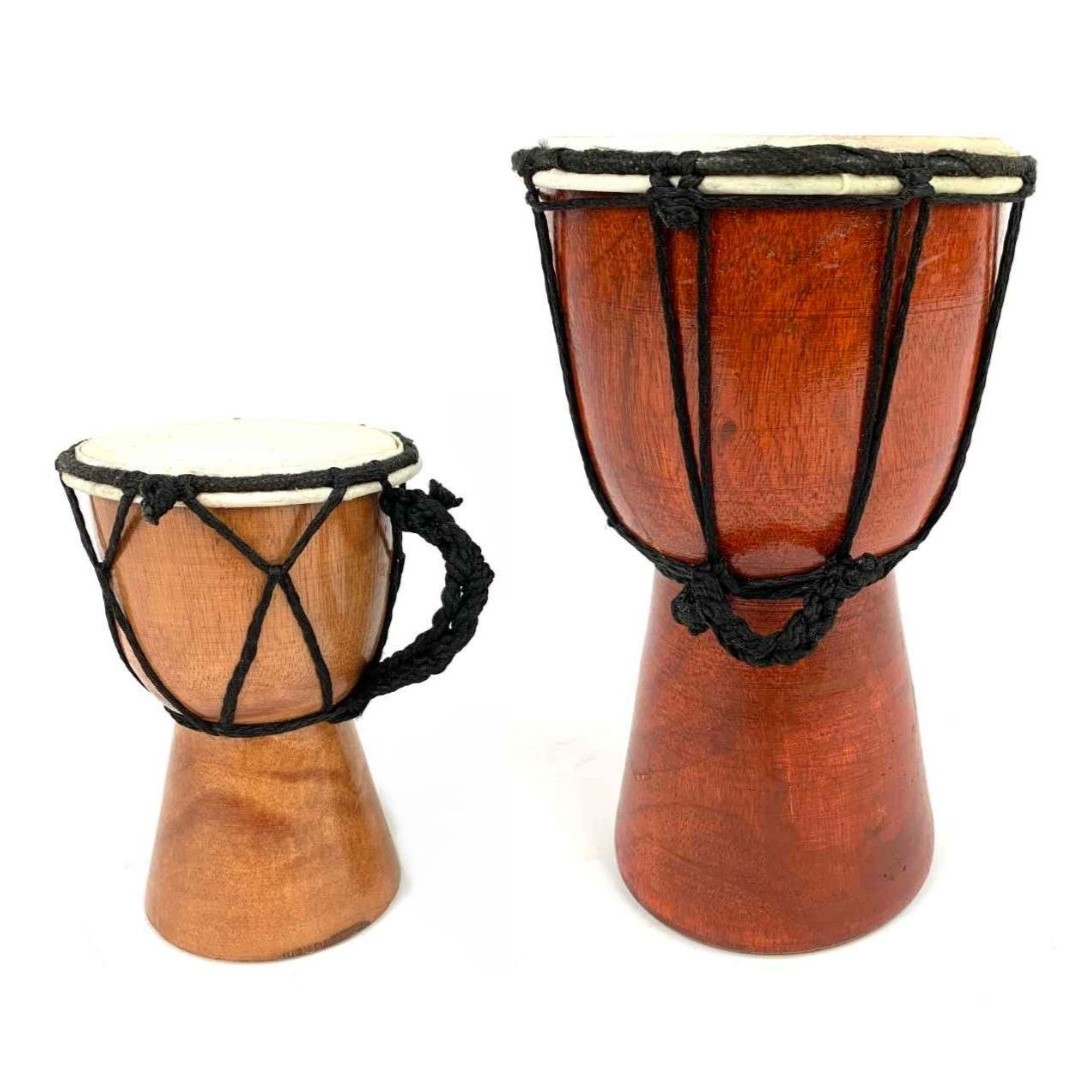
The Indo range has a drum for every age and size.
The 30cm Mini Djembe suits toddlers and children around 2 to 4 years.
The 40cm Junior Djembe covers roughly 4 to 12 years and comes in a wider Junior Plus for bigger hands.
From about 10 years and over, a 50cm All Rounder works well, and teenagers can move up to a 60cm Classic Indo djembe or a Ghana series drum.
Children grow fast, so a drum with a little room to grow into is often the better choice.
Yes. Djembe shells are covered by a lifetime structural warranty under normal playing conditions.
The skin, being a natural hide, is covered by a 5-month graduated warranty: full repair cover in the first month, then partial cover through to five months, which is the window where a hidden flaw in a hide will usually show.
See the full details on our Drum warranty page.
We ship across Australia and internationally. Most orders are dispatched on the same day, so you can expect a quick turnaround.
Delivery to metro areas in Australia usually takes 2–5 business days, with regional areas taking a little longer. We also offer express shipping options if you need your order sooner.
For international orders, delivery times depend on your location and the shipping option you choose at checkout.
You’ll receive tracking details once your order is on its way. You can find more information on shipping timeframes and options here, or feel free to contact us for help estimating delivery to your area.
Hit enter to search or ESC to close